Tuesday, September 6, 2011

Transforming Materials

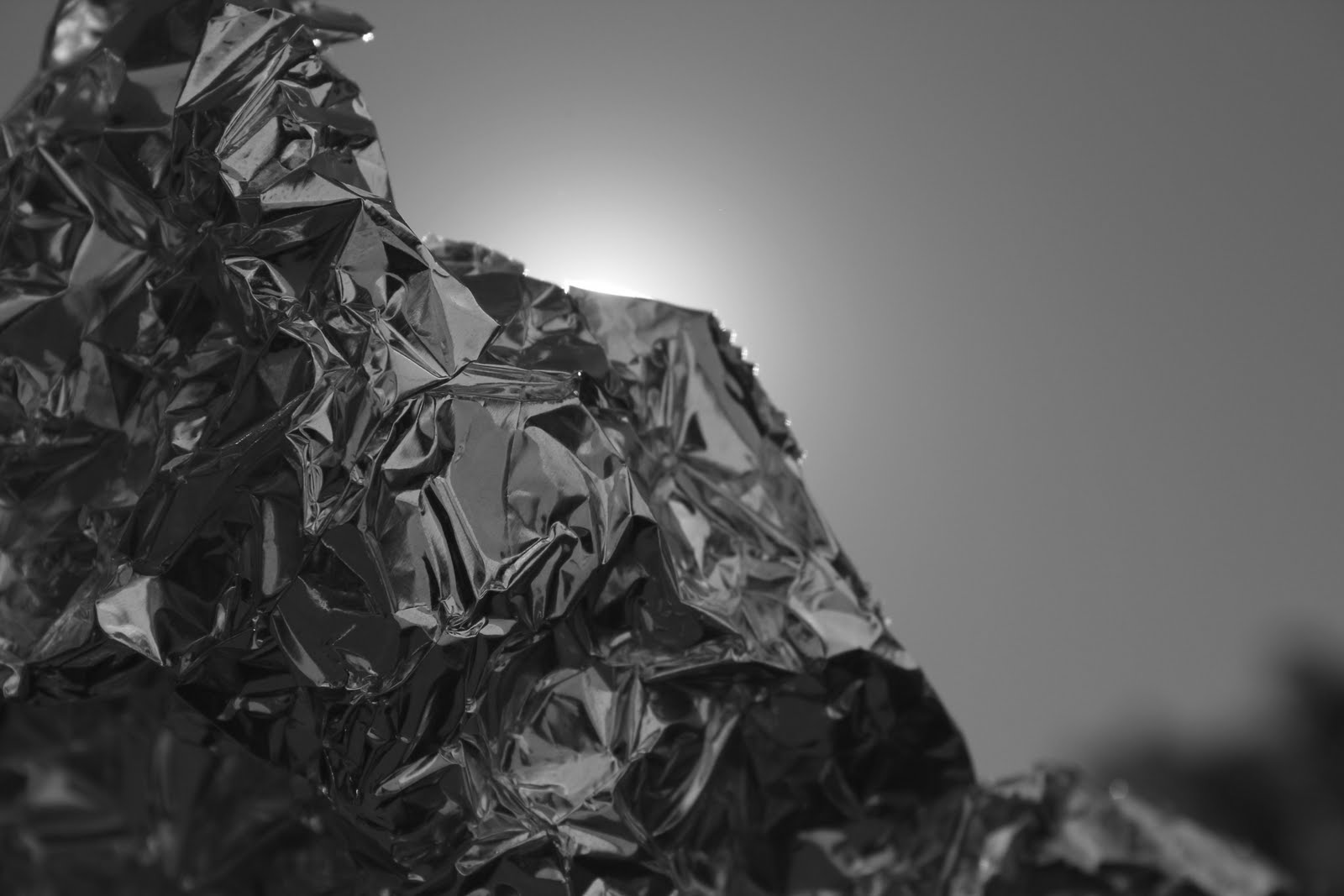
The Transforming Materials project aimed to photograph everyday materials, while incorporating them into the surrounding environments.


My final product does indeed relfect my intentions for this project.  In the beginning, I had hoped to utilize unique lighting, the sun or an unnatural source, to capture images that would make the reader question the identity of the content.


I think my final products took a totally different direction from what I had pictured in the beginning, but in a good way!  I think that I first imagined having a series of all black and white images of tinfoil, and just crumpling it.  However, I think the direction went in a completely different way in that I manipulated - or transformed - the materials so that the viewer would have to question the identity at first.


Wednesday, June 1, 2011

Final Reflections

1) Before the year began, I was excited to begin taking photography, having not had the opportunity to take the class beforehand.  I had taken may pictures with my mom's digital DSLR camera, but never film, so I knew a little about ISO, shutterspeed, and Aperture, but only a little.

2) Throughout the year, I feel like I have most needed to cultivate the skill of composition.  When taking a photograph, it is much better to look in every corner to see that what you can see through the lens is exactly what you want your photograph to look like.  In Aperture and Photoshop, you can crop images, but in the darkroom it was important to keep composition in mind when taking the photograph, so as not to warp the picture when cutting it or enlarging it.

3) The skill of composition and previous skill that I had coming into the class were helpful because I could use past knowledge to answer my own questions.  Also, with my work on composition, I now try to take a photograph exactly at the size I want it, with the borders of what I see on the lens exactly as I would like to see it on the paper.  In other words, I am trying not to take advantage of cropping as much.

4) I have realized that I need to improve my digital editing skills.  Some of the procedures needed to edit a photograph in Aperture or Photoshop are necessary tools in making a picture better, and if I learned a little more about each program I could improve on this quite a bit.

5) To improve these skills, I have practiced using Photoshop to better assimilate myself to the process of editing digital photographs.  Just playing around and see what I can do makes a difference, but also using the powerpoints we were given to accomplish the more complex procedures.

6) What I am most excited about photography right now is the fact that I have the ability to take a camera anywhere I want, take pictures, and edit them to be perfect, using just a camera, and a computer.  I like that fact that I have learned what it takes to crop, solarize, vignette, or in any way edit a photograph.

Monday, May 30, 2011

Portrait Project

The goal of the Portrait Project was to learn how to compose a photograph of a person, having planned out the composition before hand, meaning they were not candid.  My favorite photograph of the collection bellow is the last, because of the slight vignette, (which was an accident, the camera had a malfunction).  I also like the fact that the person is not looking at a camera.


Thursday, May 26, 2011

Abstract Darkroom

 The Abstract Darkroom project was much like the Abstract Digital Project, in that we aimed to take pictures of scenes or objects that masked the true identity of the thing in the picture.  Whether that means actually having a screen or film of something on the lens, or zooming in really close.


My favorite photograph of the above is the last one.  I like it so much because you can't tell what the object of focus is.  In fact, I can't even remember what it is.  I think the photograph that I struggled most with was the second, because I had to reprint it many times to get the whiter parts toned down.

Wednesday, May 25, 2011

LEED Architecture

Our goal for the LEED Architecture project was to photograph the Branson campus, while highlighting the sustainable technologies and buildings from the recent renovation.  Even though we took a lot of the pictures inside, the natural light from the large windows of each building allowed for a supplement to the camera flash, and some unique photos.


Abstract Digital

An abstract photograph is sometimes one that is taken in an unusual light, or one that it not recognizable at first glance.  In the Abstract Project, the goal was to take abstract photographs using everyday objects, scenery, or materials, and turning them into a photograph that masks the object's identity.  I experimented with different angles and light.  Sometimes allowing the shutter speed to be very long to obtain a blurred sort of look.  In other photographs I took the picture from an unusual angle, so as to obscure the identity of the object.


Tuesday, May 24, 2011

Still Life Objects with a Flash

The focus of the Still Life with Studio Lighting was to use a prop, and adjust the studio lighting to make the object look like it was in a natural space.  My two favorite photos from this project (I could not choose one) were the first and sixth.  The first photo was actually taken in the daytime, outside, but the flash made the background turn black.  I like the mystery about it.  The sixth photograph draws my attention because the book's pages pop out against the black studio background.  It seems as if the book is falling through space.